Mustakshif Shariah Board Rulings on Torula
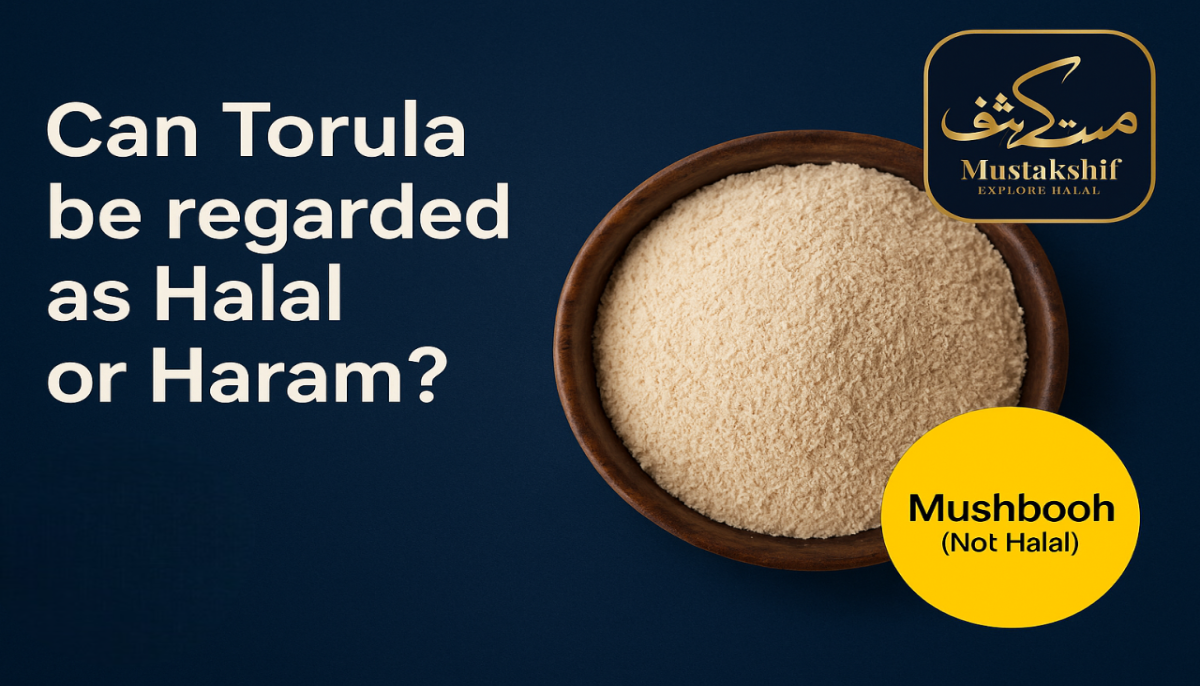
According to Mustakshif Shariah Board, Torula is considered as mushbooh (nothalal) The halal status of Torula yeast depends on its growth medium. If cultivated on sugarcane molasses or other halal-certified plant-based substrates, it is considered halal. However, if grown on substrates derived from alcohol or non-halal sources, its status becomes doubtful (mushbooh). Therefore, without clear information on its source, the permissibility of Torula yeast remains uncertain.
Introduction of Ingredient
Name: Torula Yeast
E-code: Not assigned
Synonyms: Candida utilis, Torula utilis, deactivated yeast
Torula yeast is a deactivated yeast derived from the species Candida utilis. It is commonly used as a flavor enhancer in various food products due to its umami taste and nutritional content.
How is it extracted?
Candida utilis is grown through a controlled fermentation process where it’s fed a nutrient-rich mix full of sugars, vitamins, and minerals. The yeast ferments under carefully managed conditions, keeping the temperature, pH, and oxygen levels just right. Once fermentation’s done, they harvest the yeast, usually by spinning it out with a centrifuge to separate the good stuff from the liquid. After that, the yeast gets processed, often dried or milled, to make the final product that’s ready to use in heaps of different ways.
Uses of the Ingredient
Torula yeast serves as a flavor enhancer, providing a savory, umami taste to foods. It is often used as a substitute for monosodium glutamate (MSG) in processed foods like soups, sauces, and snack items. Additionally, it contributes nutritional benefits, including B vitamins and minerals.
Conclusion
Torula yeast is a flavor-enhancing ingredient used in various food products. Its halal status hinges on the source of its cultivation. Consumers should seek products with clear labeling or halal certification to ensure compliance with dietary laws.