Mustakshif Shariah Board Rulings on E-915 (Esters of Colophane)
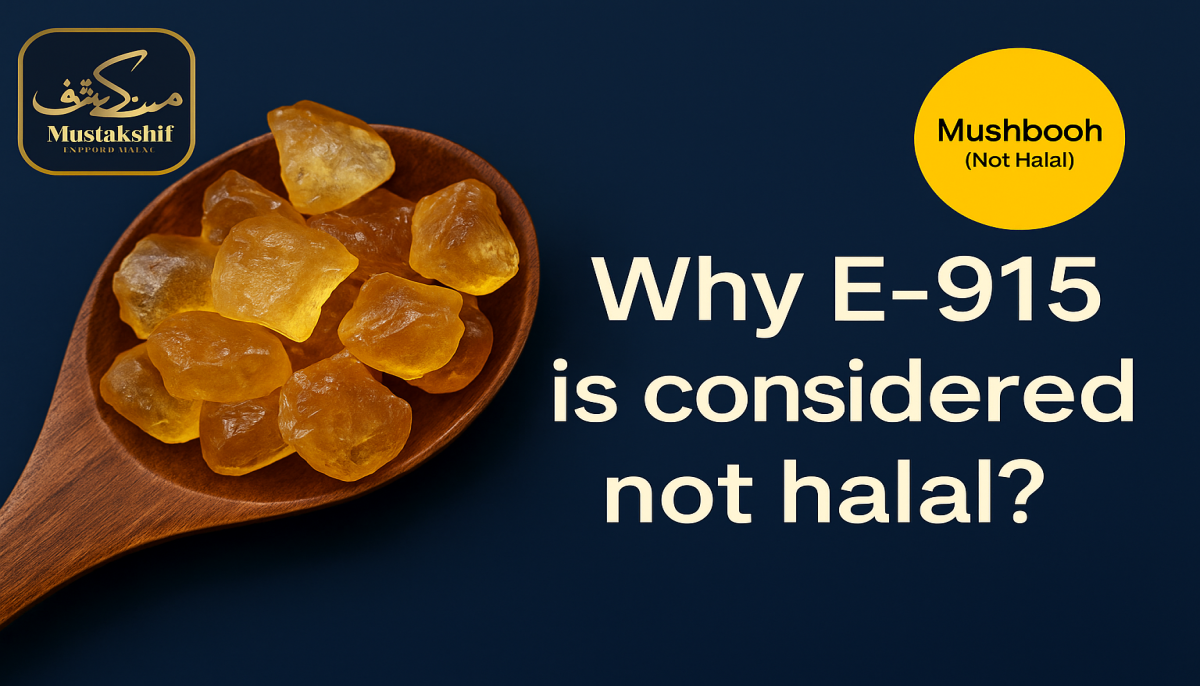
According to Mustakshif Shariah Board, E-915 is classified as Mushbooh (not Halal) due to doubt in the processing method of E-915. The base material (pine resin) is plant-derived and naturally occurring. In the processing of this food additive, solvents or alcohol-based chemicals, which might render the final product questionable in terms of Islamic dietary laws.
Fatwas Concerning the Ingredient
As of now, no widely known or specific fatwas directly address E-915. However, scholars often recommend caution with ingredients labelled Mushbooh, especially when there's a chance alcohol or animal-based processing is involved.
Ingredient overview
The code E-915 is used for esters of Colophonium, a glazing agent. This food additive is also popular with various names, such as Esteres de Glicerina, Metílico, Ester gum, or Pentaerythritol Esters of Colophane. Derived from pine resin (rosin), it gives foods a shiny appearance. But its halal status is questionable due to possible alcohol use in processing. Let’s discuss in detail.
How is E-915 extracted?
Esters of Colophonium (E-915) is derived from natural resins, especially from the sap of pine trees, known as colophonium or rosin. The resin is collected and esterified with acids or alcohol to form esters of colophonium, which are then used in food-grade applications. The whole process is done under controlled conditions.
Purpose and applications of E-915
Being a glazing agent, E-915 gives a shiny, glossy surface to confectionery, fruits, and other processed foods. This makes the products look fresh and attractive, which can influence customer choices.
Conclusion
E-915, or esters of colophonium, is a glazing agent made from pine resin. While its plant origin seems safe, uncertainty around its processing method leads to a Mushbooh classification. Until further clarification, it’s best for consumers following Halal guidelines to approach this additive with caution.