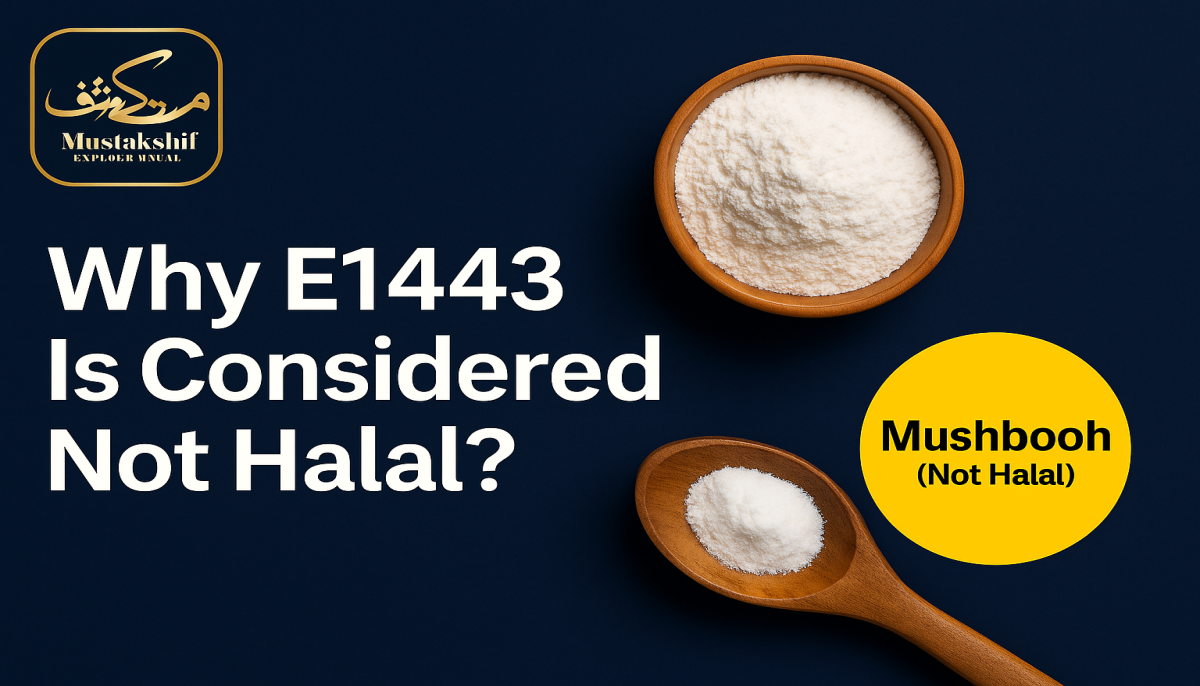
Mustakshif Shariah Board Rulings on E1443
According to Mustakshif Shariah Board, E485 is classified as Mushbooh (not Halal) due to its uncertain origion .While the source starch may stem from halal plants like corn or potato, the uncertainty arises from the chemicals and alcohol-based solvents possibly used during processing. These questionable factors prevent it from being clearly classified as halal or haram.
Religious guidance and scholarly views
No universally agreed-upon fatwas exist about hydroxypropyl distarch glycerol. Some scholars urge caution, suggesting its status depends on the specific manufacturing process and ingredients used. If plant-based and free from alcohol or animal by-products, it may lean towards permissibility. However, due to production ambiguity, confirmation from trusted certification bodies is often advised.
Introduction to the ingredient E1443
Hydroxypropyl distarch glycerol, identified by its food code E1443, is a chemically treated starch used in processed foods. Other recognised terms include hydroxypropylated distarch glycerol, glycerol hydroxypropyl distarch, and hydroxypropylated starch glycerol.
How is hydroxypropyl distarch glycerol made?
This ingredient belongs to the stabiliser category. It originates from natural starches obtained from sources like maize, spuds, or wheat. Through a specific treatment involving glycerol and hydroxypropyl compounds, the starch is chemically altered. This process enhances its resilience against heat, acidity, and mechanical stress, allowing it to support food consistency effectively.
Common roles and food applications
In cooking, hydroxypropyl distarch glycerol helps thicken and stabilize food. It improves the texture, prevents ingredients from separating, and keeps the mouthfeel consistent. You’ll often find it in products like gravies, canned soups, salad dressings, and baked goods. By keeping mixtures smooth, it enhances both flavor and appearance.
Final paragraph
Hydroxypropyl distarch glycerol, or E1443, is a modified starch contributing to food texture and stability. While widely used across the food industry, its classification as mushbooh calls for careful consideration, especially for those following dietary restrictions guided by faith.