Mustakshif Shariah Board Rulings on E477 (Propylene Glycol Esters Of Fatty Acids )
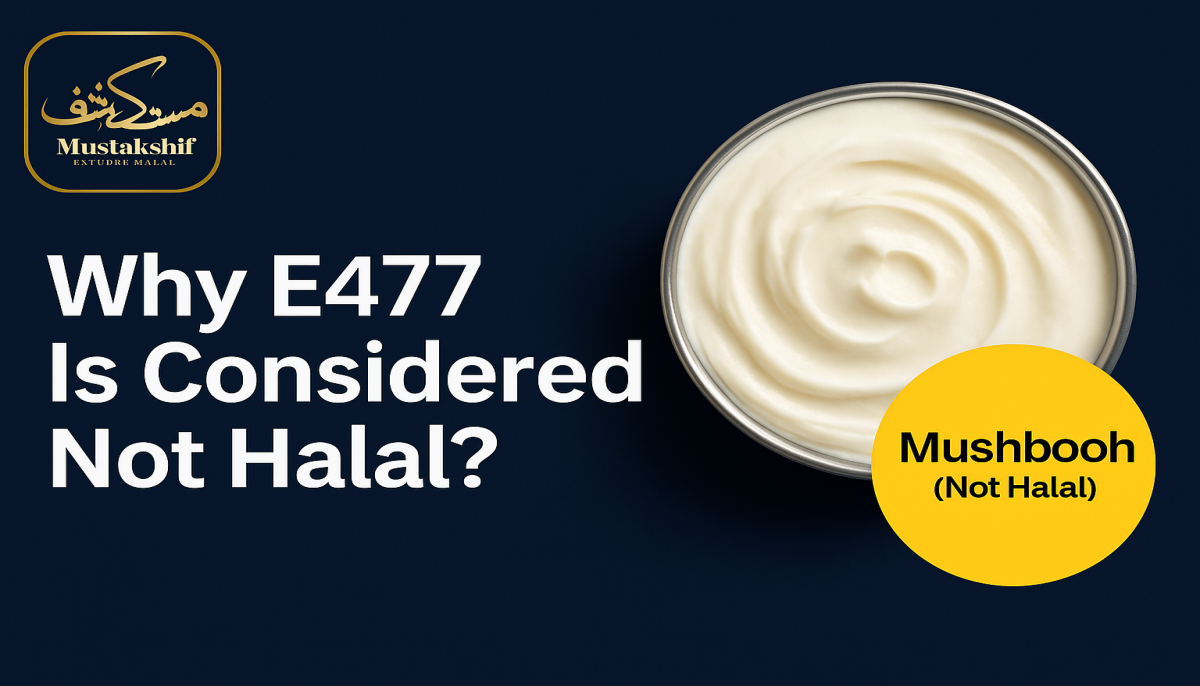
According to Mustakshif Shariah Board, E477 (Propylene Glycol Esters Of Fatty Acids ) is classified as Mushbooh (not Halal)
The ambiguity lies in the origin of its fatty acids. When these acids come from plant-based oils, there's generally no concern. However, if animal-derived and not specifically from halal sources, the status becomes questionable. No universal halal certification exists for this additive due to its dual-source potential.
Religious guidance on usage
While some scholars permit e477 when sourced from vegetables, others advise caution unless proven halal-certified. Due to a lack of transparency in ingredient sourcing by some manufacturers, many halal consumers avoid products containing this emulsifier.
Understanding the additive: e477
E477 refers to propylene glycol esters of fatty acids, also written as PGMEFAs or propylene glycol fatty acid esters. This compound functions as an emulsifier and stabiliser, widely applied in both food and non-food items.
Extraction and composition process
Propylene glycol esters are created through a chemical reaction called esterification. Fatty acids—originating from either plant oils or animal fats—are combined with propylene glycol, which itself is synthesised from propylene oxide, a petroleum by-product. After the reaction, purification ensures the end product meets the required food safety criteria. Strict quality checks are followed to confirm compliance with industry standards.
Where it’s used and why
This emulsifier ensures oil and water ingredients blend uniformly, which is crucial in preventing separation. It also helps stabilise emulsions, offering a consistent texture in products like sauces, dairy mixes, and margarine. Manufacturers value their role in refining the mouthfeel of processed foods. Outside food, the compound also finds application in pharmaceuticals and cosmetics for stabilising and textural enhancement.
Final word
E477 is a multi-purpose emulsifier with wide-reaching uses in food, cosmetics, and pharmaceutical goods. Although technically safe for consumption, its halal status remains uncertain without verified sourcing. Awareness and label scrutiny are vital for consumers following halal dietary laws.