Mustakshif Shariah Board Rulings on E634
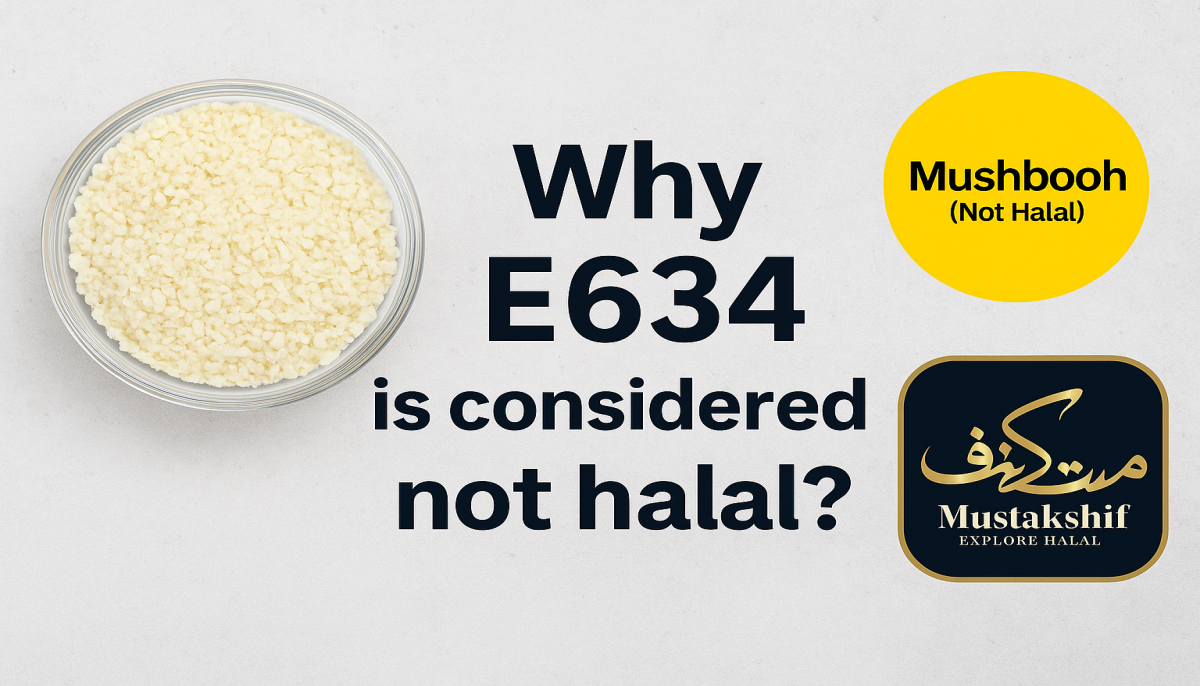
According to Mustakshif Shariah Board, E634 is classified as Mushbooh (not Halal) meaning its permissibility is uncertain. The reason lies in its possible origin. Some batches may come from meat or fish sources, raising questions for halal consumers. Unless clearly labelled, determining whether the source is animal-based or microbial can be difficult. Checking the origin of IMP and GMP is essential for determining their halal compliance.
Opinions from other scholars and fatwas
Some Islamic scholars advise caution when consuming E634 unless its source is confirmed halal. If produced synthetically or from plant-based fermentation, it may be deemed acceptable. However, without clear certification, its status remains doubtful. Muslim consumers should often rely on product transparency or seek advice from trusted authorities before consuming products containing it.
Ingredient overview
E634 is known as calcium 5'-ribonucleotides. This additive enhances flavours and improves savoury notes in food. It’s also referred to as calcium inosinate, calcium guanylate, or IMP-GMP calcium salt mixture.
Extraction procedure
This ingredient is made by fermenting raw materials using bacteria or yeast strains. Through fermentation, IMP and GMP nucleotides are formed. These components are then separated and purified from the fermentation liquid. Once isolated, they are mixed with calcium to form their salts. The resulting compounds are blended, dried, and packed to be used in food items.
Different ways to use E634
Calcium ribonucleotides boost flavour intensity, especially in savoury food. This compound is found in instant meals, spice blends, soups, and packaged meats. By amplifying umami taste, it works well with other enhancers like MSG. It also appears in animal feed and various snacks to increase their taste.
Conclusion
Calcium 5'-ribonucleotides, identified as E634, are added to improve food flavour. The production process varies, and its source may include animal derivatives. This leads to its mushbooh classification. Checking labels or contacting producers helps those who follow halal dietary rules make informed choices.