Mustakshif Shariah Board Rulings on E966
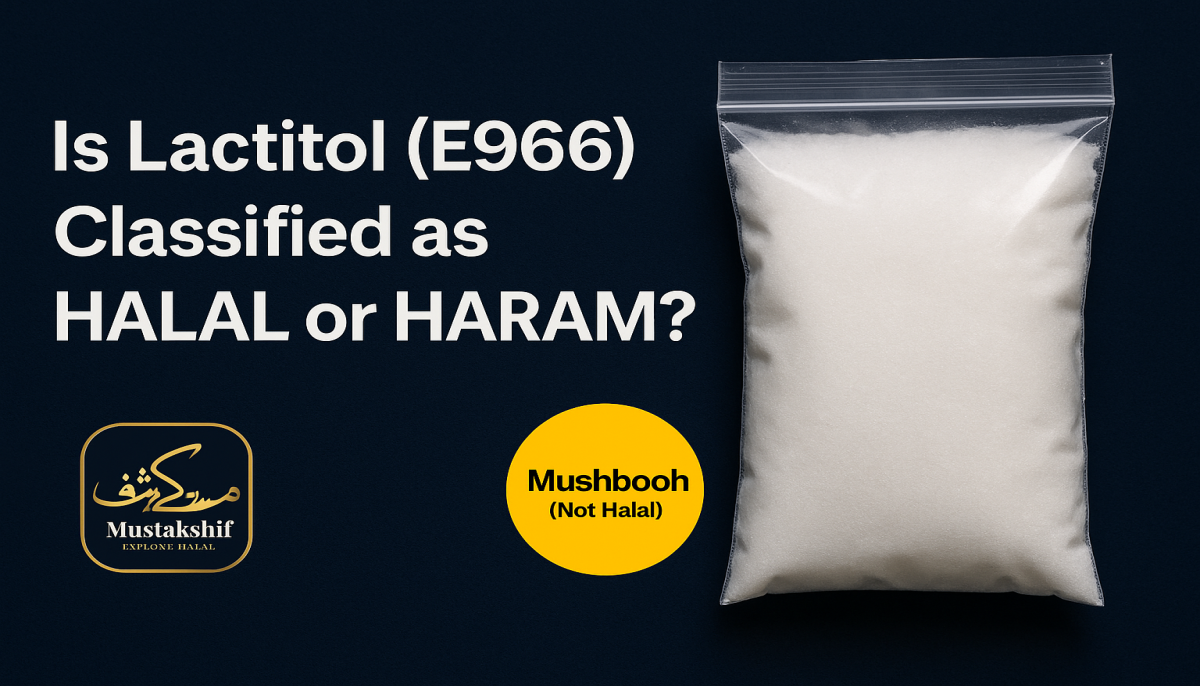
According to Mustakshif Shariah Board, E966 (Lactitol) is classified Mushbooh (doubtful) due to the uncertainty surrounding its source. If the lactose used is derived from halal-certified whey, lactitol is considered halal. However, if the whey is obtained using non-halal animal rennet, the status becomes questionable. Without clear information on the source, it is advised to exercise caution.
Fatwas concerning the ingredient
Islamic scholars and halal certification bodies emphasize the importance of verifying the source of ingredients like lactitol. The South African National Halaal Authority (SANHA) has listed E966 as halal when derived from halal sources. However, other organizations classify it as doubtful without proper certification.
Introduction of Ingredient
E966, commonly known as Lactitol, is a sugar alcohol used as a low-calorie sweetener and texturizer in various food products. It is also referred to as Lactositol, Lactit, or Lactobiosit. Lactitol is approximately 30–40% as sweet as sucrose and provides about 2.4 kcal/g, making it suitable for low-calorie and sugar-free foods.
How is it extracted?
Lactitol is produced by the hydrogenation of lactose, which is derived from whey, a by-product of cheese production. The process involves converting lactose into lactitol using a catalyst, typically Raney nickel. The source of lactose is crucial; if it originates from halal-certified whey, the resulting lactitol is considered halal.
Uses of Lactitol
Lactitol serves multiple functions in the food industry. It is used as a sweetener, texturizer, and stabilizer in products like baked goods, candies, chocolates, and ice creams. Its stability under heat and acidic conditions makes it ideal for baking and confectionery applications. Additionally, lactitol is used in pharmaceuticals as an osmotic laxative to treat constipation.
Conclusion
E966 (Lactitol) is a versatile sugar substitute used in various food and pharmaceutical products. Its halal status depends on the source of lactose used in its production. To ensure compliance with dietary laws, consumers should look for halal certification or contact manufacturers for source verification.