Mustakshif Shariah Board Rulings on E921
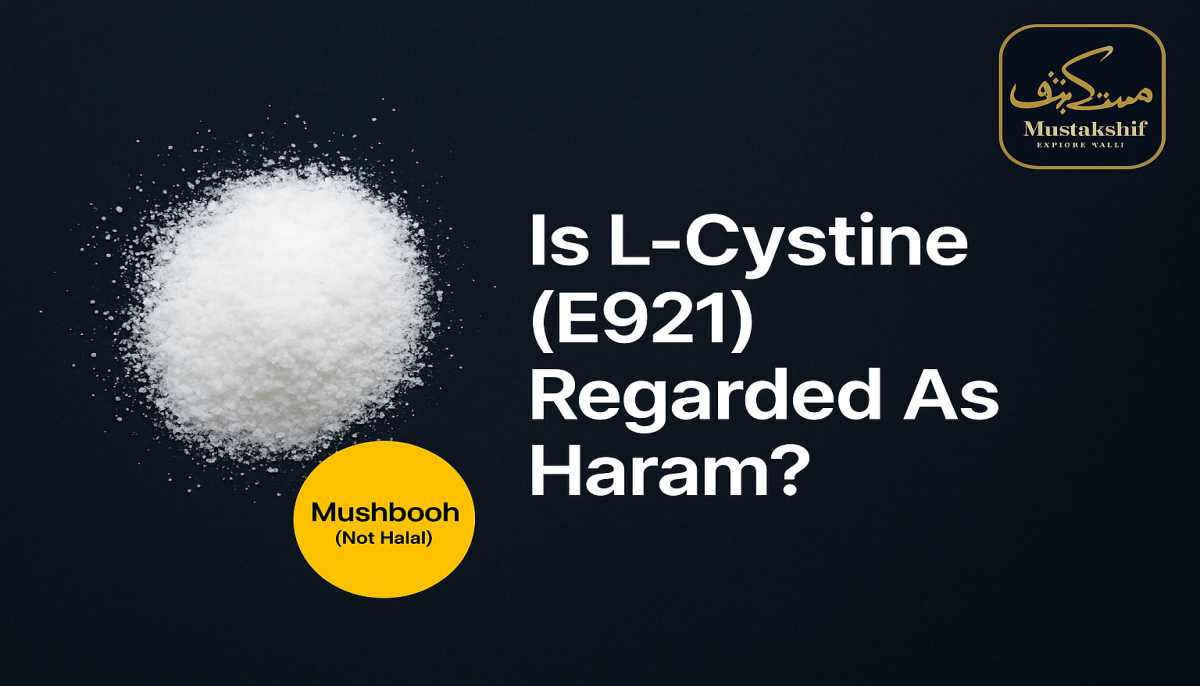
According to Mustakshif Shariah Board, E921 s regarded as Mushbooh. The halal status of E921 (L-cystine) depends largely on its source. If it is derived from plant-based materials or produced through microbial fermentation, it is considered halal and permissible for consumption. However, L-cystine is often produced from animal-derived sources such as human hair or duck feathers, and in such cases, its permissibility becomes questionable. If the source is human hair or animals not slaughtered according to Islamic guidelines, it may be classified as haram. Because the exact source is not always clearly indicated on product labels, E921 is frequently regarded as mushbooh, meaning uncertain, unless verified by a reputable halal certification authority. To ensure compliance with halal dietary laws, it is advisable to look for products that are halal-certified or specifically state that the L-cystine used is from plant-based or synthetic sources.
Fatwas and religious considerations
Some Islamic authorities advise avoiding it if the origin is unclear. Others allow it when sourced synthetically or from halal-certified animals. Due to these differing views, many choose to steer clear unless full traceability is provided.
Understanding E921: An amino acid in food
E921, known chemically as L-cystine, is a compound frequently used in food preparation. L-cystine hydrochloride, cystine, and l-α-amino-β-thiolpropionic acid are some of the alternative names used to express E921.
Where it begins: extraction explained
This ingredient isn’t created from grains or plants. Instead, it usually comes from human or animal-based sources, commonly hair, poultry feathers, or hog bristles. The process involves isolating L-cysteine from these protein-heavy materials. Once extracted, cysteine undergoes oxidation, resulting in the creation of l-cystine. Careful filtration and analysis follow, ensuring it is safe for consumption.
How it works in foods
When added to the dough, E921 takes on several roles. First, it can boost the dough’s structure by reinforcing the gluten framework. This makes it more elastic and manageable. At other times, it softens the mixture by breaking certain chemical bonds. In baked goods, this can result in fluffier textures, improved volume, and enhanced crumb definition. As a processing aid, it helps bakers shape and handle dough more effectively.
Sum up
E92, L-cystine, has a functional place in baking, strengthening or softening dough while improving texture. However, its origin often raises concerns for those following halal diets. Without clear sourcing, it sits in the grey area of acceptability. Always check labels or opt for certified alternatives when in doubt.