Mustakshif Shariah Board Rulings on E472e
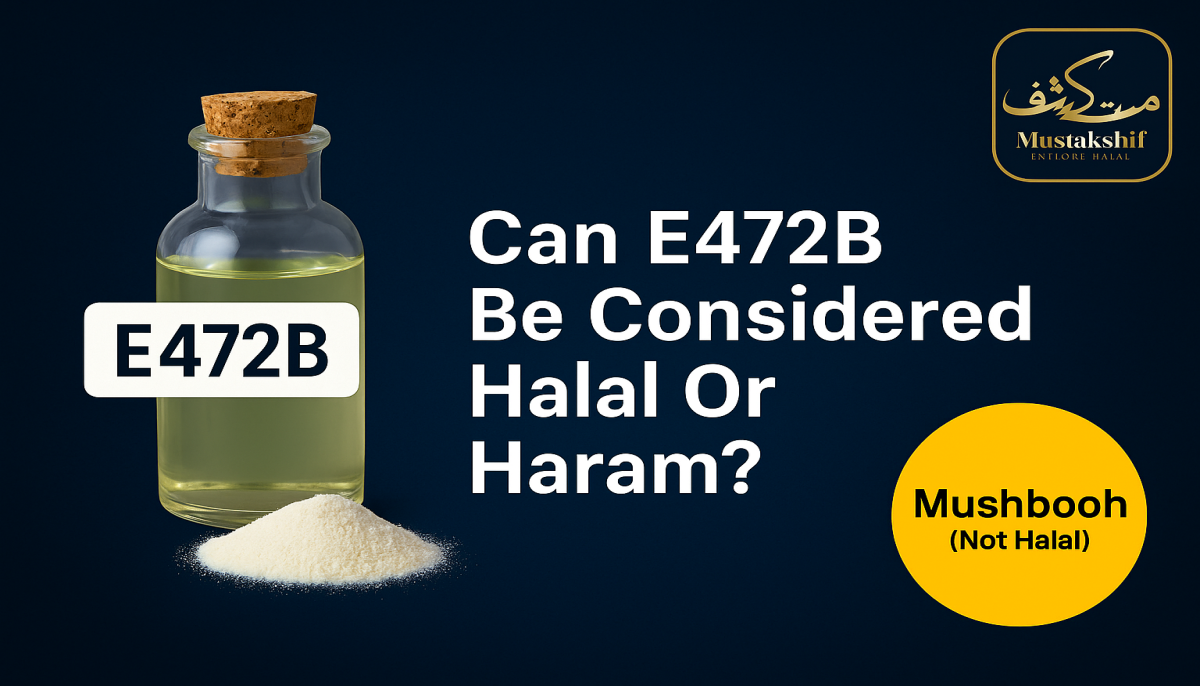
According to Mustakshif Shariah Board, E720e ingredient is marked as mushbooh. This means its halal status is unclear. Though it’s sourced from vegetable oils and acids, the origins of the glycerol, tartaric acid, and fatty acids should be verified, especially if used in sensitive diets.
Shariah’s opinion
Some Islamic scholars permit e472e if derived from halal-certified vegetable oils and free from alcohol residues. However, others advise caution unless manufacturers provide clear sourcing details. Due to its uncertain source, scholars suggest checking each component’s origin before consumption.
All about E472e
E472e is widely used as a food additive for mixing ingredients that don’t naturally blend. This E code is specific for diacetyltartaric and fatty acid esters of glycerol. It’s part of the emulsifier group and goes by other names like diacetyltartaric acid esters of mono- and diglycerides, DATEM, or acetyltartaric acid glycerol esters.
Extraction method
This emulsifier comes from mono and diglycerides, which are usually taken from plant-based oils such as soybean, palm, or sunflower. These glycerides are chemically combined with tartaric acid, a byproduct from wine-making, and acetic acid. The process includes esterification, where acids react with the glycerides, followed by purification to clear out unreacted parts, and finally, drying to get a stable form suitable for food production.
Utilisation in various fields
E472e mainly works as an emulsifier. It helps hold oil and water together in foods like margarine, salad dressings, and coffee creamers. In baked goods, it improves dough texture, makes it easier to handle, and gives a consistent result. It also extends shelf life by stabilising structure and texture. It is mostly used in bread, frozen pizza, hot chocolate mix, and even cosmetic cream.
Conclusion
E472e is an emulsifier that plays an important role in food production. Although it helps improve food quality and shelf life, its halal status depends on ingredient sourcing. Consumers seeking halal options should look for certified products or consult manufacturers for clarity.